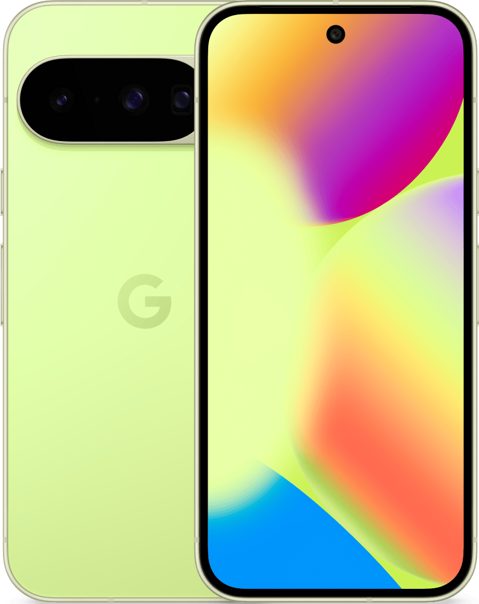
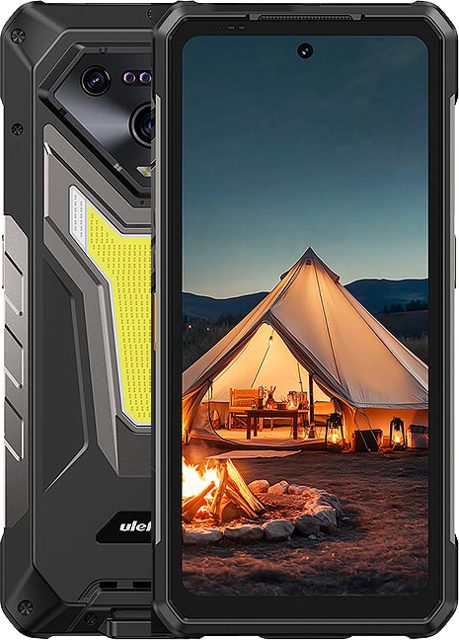
Google Pixel 10 vs Ulefone Armor 34+
Verdict
Google Pixel 10 is clearly better for most people
Overall score
73 Google Pixel 10 61 Ulefone Armor 34+
Why pick Google Pixel 10
- Brighter screen (2030 nits vs 600 nits) Maker's figure against a lab test
- Optical stabilization on the main camera
- 5× optical zoom camera
- LTPO OLED screen (vs LCD)
Why pick Ulefone Armor 34+
- 93 h 20 min longer battery life
- Larger main camera sensor (1/1.3" vs 1/2.0")
- Faster charging: 66 W vs 30 W
- Sharper selfie camera (32 MP vs 10.5 MP)
Google Pixel 10 is clearly better for gaming
Overall score
72 Google Pixel 10 58 Ulefone Armor 34+
Why pick Google Pixel 10
- Brighter screen (2030 nits vs 600 nits) Maker's figure against a lab test
- 73% faster overall Typical for its chipset
- LTPO OLED screen (vs LCD)
- Better HDR video: HDR10+ vs no HDR
Why pick Ulefone Armor 34+
- 93 h 20 min longer battery life
- Faster charging: 66 W vs 30 W
- 3.5 mm headphone jack
- Better water resistance: IP69K vs IP68
Google Pixel 10 is much better for photos and video
Overall score
79 Google Pixel 10 61 Ulefone Armor 34+
Why pick Google Pixel 10
- Optical stabilization on the main camera
- 5× optical zoom camera
- Brighter screen (2030 nits vs 600 nits) Maker's figure against a lab test
- LTPO OLED screen (vs LCD)
Why pick Ulefone Armor 34+
- Larger main camera sensor (1/1.3" vs 1/2.0")
- 93 h 20 min longer battery life
- Sharper selfie camera (32 MP vs 10.5 MP)
- Faster charging: 66 W vs 30 W
Ulefone Armor 34+ is much better for battery life
Overall score
54 Google Pixel 10 70 Ulefone Armor 34+
Why pick Google Pixel 10
- Wireless charging (15 W)
- Brighter screen (2030 nits vs 600 nits) Maker's figure against a lab test
- Optical stabilization on the main camera
- 5× optical zoom camera
Why pick Ulefone Armor 34+
- 93 h 20 min longer battery life
- Faster charging: 66 W vs 30 W
- Larger main camera sensor (1/1.3" vs 1/2.0")
- Better water resistance: IP69K vs IP68
Google Pixel 10 is much better for the money
Overall score
58 Google Pixel 10 27 Ulefone Armor 34+
Why pick Google Pixel 10
- Brighter screen (2030 nits vs 600 nits) Maker's figure against a lab test
- Optical stabilization on the main camera
- 5× optical zoom camera
- LTPO OLED screen (vs LCD)
Why pick Ulefone Armor 34+
- 93 h 20 min longer battery life
- Larger main camera sensor (1/1.3" vs 1/2.0")
- Faster charging: 66 W vs 30 W
- Sharper selfie camera (32 MP vs 10.5 MP)
Scores by category
- Google Pixel 10
- Ulefone Armor 34+
Performance
78 Google Pixel 10 60 Ulefone Armor 34+Lab testedTypical for its chipsetDisplay
91 Google Pixel 10 31 Ulefone Armor 34+Lab testedCamera
84 Google Pixel 10 63 Ulefone Armor 34+Battery
28 Google Pixel 10 80 Ulefone Armor 34+Lab tested
Build and durability
92 Google Pixel 10 75 Ulefone Armor 34+Connectivity and features
79 Google Pixel 10 60 Ulefone Armor 34+
Biggest differences
See all specs Spec Google Pixel 10Ulefone Armor 34+ Ahead by
Battery life (active use) 12 h 8 minBetter: 105 h 28 min +93 h 20 min
Peak brightness Better: 2030 nitsLab tested600 nits
Optical stabilization Better: YesNo
Optical zoom Better: 5×No
Screen type Better: LTPO OLEDLCD
Overall performance (AnTuTu 10) Better: 1,173,841Lab tested676,899Typical for its chipset
Size and weight
- Google Pixel 10
- Ulefone Armor 34+
Full specs
General
Specs Google Pixel 10Ulefone Armor 34+
Announced
Wednesday, 20 August 2025
Monday, 01 December 2025
Released
Thursday, 28 August 2025
Monday, 01 December 2025
Status
Available
Available
Design
Specs Google Pixel 10Ulefone Armor 34+
Height
152.8 mm (6.02 inch)
183.1 mm (7.21 inch)
Width
72 mm (2.83 inch)
86.6 mm (3.41 inch)
Thickness
8.6 mm (0.34 inch)
32.7 mm (1.29 inch)
Weight
204 g (7.20 oz)
763 g (26.91 oz)
Build materials
Back: Gorilla Glass Victus 2
Frame: Aluminum
Front: Gorilla Glass Victus 2
Frame: Aluminum
Front: Gorilla Glass Victus 2
—
Colors
Black, Blue, Green, Violet
Black
Resistance
Dust-tight and water-resistant (submersible up to 1.5m for 30 minutes)
Dust and water-resistant (withstands high-pressure water jets; submersible up to 2m for 30 minutes)
Resistance certification
IP68
Better:
IP68, IP69K
Display
Specs Google Pixel 10Ulefone Armor 34+
Display type
Better:
LTPO OLED
IPS LCD
Display size
6.3 inch
6.95 inch
Resolution
1080 × 2424 pixels
1080 × 2460 pixels
Refresh rate
120 Hz
120 Hz
Aspect ratio
20:9
—
Pixel density
422 ppi
387 ppi
Screen-to-body ratio
≈ 86.1%
≈ 72.3%
Peak brightness
3000 cd/m²
600 cd/m²
Screen protection
Better:
Corning Gorilla Glass Victus 2
Corning Gorilla Glass 5, Drop resistant (up to 2m), MIL-STD-810H compliant
Touchscreen
Yes
Yes
Display features
Capacitive Touchscreen
HDR10+
Multi-touch display
HDR10+
Multi-touch display
Capacitive Touchscreen
Multi-touch display
Multi-touch display
Hardware
Specs Google Pixel 10Ulefone Armor 34+
Chipset
Google Tensor G5
Mediatek Dimensity 7400X
CPU cores
8
8
CPU technology
3 nm
4 nm
CPU max speed
3.78 GHz
2600 MHz
CPU architecture
64-bit
64-bit
Microarchitecture
1x 3.78 GHz – Cortex-X4
5x 3.05 GHz – Cortex-A725
2x 2.25 GHz – Cortex-A520
5x 3.05 GHz – Cortex-A725
2x 2.25 GHz – Cortex-A520
4x 2.6 GHz – Cortex-A78
4x 2.0 GHz – Cortex-A55
4x 2.0 GHz – Cortex-A55
Memory type
LPDDR5X
LPDDR5
GPU
IMG PowerVR DXT-48-1536
ARM Mali-G615 MC2
RAM
12GB
16GB
Storage
128GB, 256GB
512GB
Storage type
Better:
UFS 3.1 (128GB)
UFS 4.0 (256GB)
UFS 4.0 (256GB)
UFS 3.1
Variants
128GB 12GB RAM
256GB 12GB RAM
256GB 12GB RAM
512GB 16GB RAM
Expandable storage
No
Yes
Card slots
—
microSDXC
Benchmarks
Specs Google Pixel 10Ulefone Armor 34+
Kalvo speed score
72
51
AnTuTu 10
Better:
1,173,841 Rank 417 of 1,536
676,899 Typical for Mediatek Dimensity 7400X · Rank 749 of 1,536
Geekbench 6 multi-core
Better:
5,857
2,974 Typical for Mediatek Dimensity 7400X
3DMark Wild Life Extreme
Better:
3,232 Rank 372 of 1,252
1,020 Typical for Mediatek Dimensity 7400X · Rank 595 of 1,252
Software
Specs Google Pixel 10Ulefone Armor 34+
Operating system
Android 16 (Baklava), Upgradable to Android 17 (Cinnamon Bun), with up to 7 major OS updates
Android 15 (Vanilla Ice Cream)
Main camera
Specs Google Pixel 10Ulefone Armor 34+
Camera support
Yes
Yes
Cameras
Triple camera
Triple camera
Wide angle
48 MP, ƒ/1.7, 25 mm, 0.8 μm, 1/2.0" Sensor size
Dual-Pixel PDAF
Optical Image Stabilization (OIS)
Optical Image Stabilization (OIS)
50 MP, ƒ/2.0, 23 mm, 1.2 μm, 1/1.3" Sensor size
Multi-Directional PDAF
Ultra-wide angle
13 MP, ƒ/2.2, 120°, 1/3.1" Sensor size
PDAF
50 MP, ƒ/2.2, 16 mm, 117°, 0.64 μm, 1/2.76" Sensor size
night vision
—
64 MP, ƒ/1.8, 0.7 μm, 1/2.0" Sensor size
4 infrared lights
Telephoto
10.8 MP, ƒ/3.1, 112 mm, x5 Optical zoom, 1/3.2" Sensor size
Dual-Pixel PDAF
Optical Image Stabilization (OIS)
Optical Image Stabilization (OIS)
—
Flash support
Yes
Yes
Flash type
LED flash
Dual LED flash
Features
Best Take
Laser Autofocus
Multi-zone Laser Autofocus (AF)
Panorama
Pixel Shift
Ultra HDR
Laser Autofocus
Multi-zone Laser Autofocus (AF)
Panorama
Pixel Shift
Ultra HDR
High Dynamic Range (HDR)
Panorama
Panorama
Video support
Yes
Yes
Video resolution
2160p @ 24/30/60 fps
1080p @ 24/30/60/120/240 fps
1080p @ 24/30/60/120/240 fps
2160p @ 30 fps
1080p @ 30 fps
1080p @ 30 fps
Video features
10-bit HDR, Gyro-EIS, Optical Image Stabilization (OIS)
Gyro-EIS
Front camera
Specs Google Pixel 10Ulefone Armor 34+
Camera support
Yes
Yes
Cameras
Single camera
Single camera
Wide angle
—
32 MP, ƒ/2.5, 25 mm, 0.8 μm, 1/2.8" Sensor size
Ultra-wide angle
10.5 MP, ƒ/2.2, 20 mm, 95°, 1.22 μm, 1/3.1" Sensor size
PDAF
—
Features
High Dynamic Range (HDR)
Panorama
Panorama
—
Video support
Yes
Yes
Video resolution
2160p @ 30/60 fps
1080p @ 30/60 fps
1080p @ 30/60 fps
1080p @ 30 fps
Battery
Specs Google Pixel 10Ulefone Armor 34+
Type
Li-Ion
Li-Ion
Capacity
4970 mAh
25500 mAh
Wired charging speed
30 W
Better:
66 W
Wireless charging support
Yes
—
Wireless charging speed
Better:
15 W
—
Features
Qi2 wireless charging
Reverse wired charging
Wired charging from 0-55% in 30 minutes (as advertised)
Reverse wired charging
Wired charging from 0-55% in 30 minutes (as advertised)
Reverse wired charging
Network
Specs Google Pixel 10Ulefone Armor 34+
SIM cards
Dual SIM (Nano-SIM + eSIM)
Dual SIM (eSIM + eSIM)
Dual SIM (eSIM + eSIM)
Dual SIM (Nano-SIM + Nano-SIM)
VoLTE support
Yes
Yes
Data speed
5G, LTE (CA), HSPA
5G, LTE, HSPA
Connectivity
Specs Google Pixel 10Ulefone Armor 34+
Wi-Fi support
Yes ( Wi-Fi 6 )
Yes ( Wi-Fi 6 )
Wi-Fi standards
802.11/a/b/g/n/ac/ax
802.11/a/b/g/n/ac/ax
Wi-Fi features
Tri-band
Tri-band
Bluetooth
Yes, v6.0
Yes, v5.4
USB ports
Better:
USB Type-C 3.2
USB Type-C 2.0
USB On-The-Go
USB On-The-Go
USB connectivity
USB charging, USB Mass Storage device (UMS)
Charging or accessories connector pins, USB charging, USB Mass Storage device (UMS)
GPS support
Yes
Yes
GPS features
BDS, GALILEO, GLONASS, GPS (L1 & L5), NavIC, QZSS
BDS, GALILEO, GLONASS, GPS, NavIC, QZSS
NFC support
Yes
Yes
Multimedia
Specs Google Pixel 10Ulefone Armor 34+
Loudspeaker
Yes
Yes
Headphone jack
No
Better:
Yes
Audio type
Stereo speakers
—
FM radio
No
Yes
Features
Specs Google Pixel 10Ulefone Armor 34+
Sensors
Accelerometer
Barometer
Compass
Gyroscope
Proximity sensor
Ultrasonic under-display fingerprint sensor
Barometer
Compass
Gyroscope
Proximity sensor
Ultrasonic under-display fingerprint sensor
Accelerometer
Barometer
Compass
Gyroscope
Proximity sensor
Side-mounted Fingerprint Sensor
Barometer
Compass
Gyroscope
Proximity sensor
Side-mounted Fingerprint Sensor
Special features
Bypass charging
Emergency SOS via satellite
Programmable Power Supply (PPS)
USB Power Delivery 3.0
Emergency SOS via satellite
Programmable Power Supply (PPS)
USB Power Delivery 3.0
Accessory connector (ulefone endoscope, microscope)
Dedicated flood flashlight with 1100 lumens
RGB led on the back (music, calling, notification, charging)
Warning light
Dedicated flood flashlight with 1100 lumens
RGB led on the back (music, calling, notification, charging)
Warning light
Lab tests
Specs Google Pixel 10Ulefone Armor 34+
EU energy label
Specs Google Pixel 10Ulefone Armor 34+
Energy efficiency class
Class B
Better:
Class A
Battery endurance per charge
49 h 23 min
Better:
384 h 54 min
Battery lifespan
1,000 charge cycles
1,000 charge cycles
Drop resistance class
Better:
Class A
Class D
Radiation (SAR)
Specs Google Pixel 10Ulefone Armor 34+
Body SAR (US)
0.99 W/kg Limit 1.6 W/kg
—
Head SAR (EU)
0.99 W/kg Limit 2.0 W/kg · Rank 380 of 532
—
Body SAR (EU)
1.39 W/kg Limit 2.0 W/kg
—
These phones share every spec listed here.
Compare with other phones



How scores work
Each category score shows where a phone stands among phones launched in the last two years: 80 means it beats 80% of them. Scores move as new phones arrive.
Benchmarks, battery and brightness come from lab tests when the phone was tested. Otherwise the scores use results typical for its chipset, or an estimate from its specifications, and say so.
The camera score rates the hardware (sensor size, lens brightness, stabilization, zoom and video), not the photos themselves.
Small differences people would not notice, such as 120 Hz against 144 Hz, never count as a win. Size and weight are shown but never scored, because bigger is a preference.
Value compares a phone's overall score with what phones at the same price usually score. Phones launched more than three years ago get no value score, because their listed prices are usually used or clearance prices.