Honor Magic5 vs Xiaomi 14
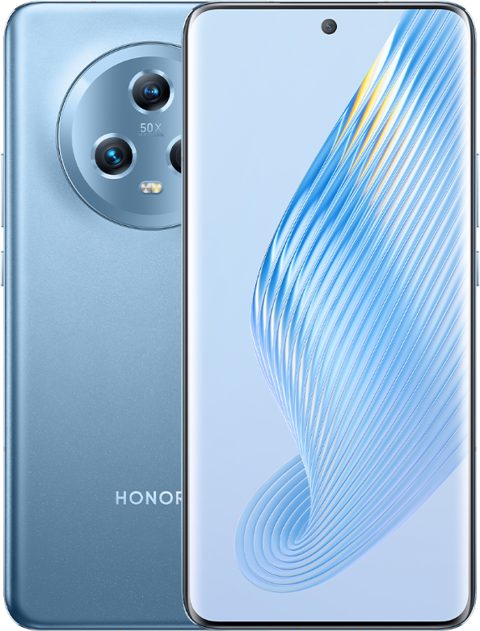
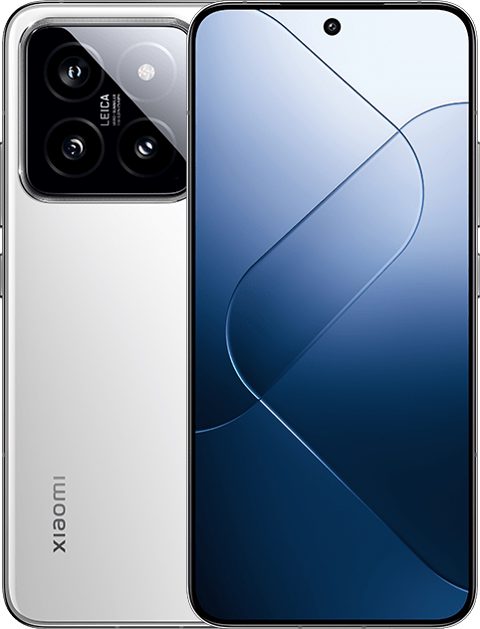
Verdict
Xiaomi 14 is much better for most people
Overall score
58 Honor Magic5 85 Xiaomi 14
Why pick Honor Magic5
No clear advantage here
Why pick Xiaomi 14
- 36% cheaper
- Better water resistance: IP68 vs no rating
- Wireless charging (50 W)
- Tougher screen glass (premium toughened glass vs no named glass)
Xiaomi 14 is much better for gaming
Overall score
64 Honor Magic5 85 Xiaomi 14
Why pick Honor Magic5
No clear advantage here
Why pick Xiaomi 14
- Wireless charging (50 W)
- 36% cheaper
- 31% faster overall Typical for its chipset
- Better water resistance: IP68 vs no rating
Xiaomi 14 is much better for photos and video
Overall score
60 Honor Magic5 83 Xiaomi 14
Why pick Honor Magic5
No clear advantage here
Why pick Xiaomi 14
- Better water resistance: IP68 vs no rating
- 36% cheaper
- Brighter main camera lens (f/1.6 vs f/1.9)
- Tougher screen glass (premium toughened glass vs no named glass)
Xiaomi 14 is much better for battery life
Overall score
46 Honor Magic5 82 Xiaomi 14
Why pick Honor Magic5
No clear advantage here
Why pick Xiaomi 14
- Wireless charging (50 W)
- Better water resistance: IP68 vs no rating
- 36% cheaper
- Tougher screen glass (premium toughened glass vs no named glass)
Honor Magic5 launched more than three years ago, so it has no value-for-money score
Overall score
— Honor Magic5 — Xiaomi 14
Why pick Honor Magic5
No clear advantage here
Why pick Xiaomi 14
- 36% cheaper
- Better water resistance: IP68 vs no rating
- Wireless charging (50 W)
- Tougher screen glass (premium toughened glass vs no named glass)
Scores by category
- Honor Magic5
- Xiaomi 14
Performance
79 Honor Magic5 86 Xiaomi 14Typical for its chipsetLab testedDisplay
70 Honor Magic5 84 Xiaomi 14Lab testedCamera
66 Honor Magic5 82 Xiaomi 14Battery
33 Honor Magic5 79 Xiaomi 14EstimatedLab testedBuild and durability
3 Honor Magic5 93 Xiaomi 14Connectivity and features
85 Honor Magic5 93 Xiaomi 14
Biggest differences
See all specs Spec Honor Magic5Xiaomi 14 Ahead by
Water resistance no ratingBetter: IP68
Wireless charging NoBetter: 50 W
Screen glass no named glassBetter: premium toughened glass
Overall performance (AnTuTu 10) 1,523,655Typical for its chipsetBetter: 2,003,429Lab tested
Screen type OLEDBetter: LTPO OLED
Main camera aperture f/1.9Better: f/1.6
Size and weight
- Honor Magic5
- Xiaomi 14
Full specs
General
Specs Honor Magic5Xiaomi 14
Announced
Monday, 27 February 2023
Thursday, 26 October 2023
Released
Friday, 31 March 2023
Wednesday, 01 November 2023
Status
Available
Available
Design
Specs Honor Magic5Xiaomi 14
Height
161.4 mm (6.35 inch)
152.8 mm (6.02 inch)
Width
75.5 mm (2.97 inch)
71.5 mm (2.81 inch)
Thickness
7.8 mm (0.31 inch)
8.2 mm (0.32 inch)
Weight
191 g (6.74 oz)
188 g (6.63 oz)
Build materials
Back: Glass or silicone polymer (eco leather)
Front: Glass
Back: Glass or silicone polymer (eco leather)
Frame: Aluminum
Front: Gorilla Glass Victus
Colors
Black, Glacier Blue Color, Green, Orange, Purple
Black, Green, Pink, White
Resistance
—
Dust resistant
Water resistance
Resistance certification
—
Better:
IP68
Display
Specs Honor Magic5Xiaomi 14
Display type
OLED
Better:
LTPO OLED
Display size
6.73 inch
6.36 inch
Resolution
1224 × 2688 pixels
1200 × 2670 pixels
Refresh rate
120 Hz
120 Hz
Aspect ratio
—
20:9
Pixel density
439 ppi
460 ppi
Screen-to-body ratio
≈ 90.4%
≈ 89.3%
Peak brightness
1600 cd/m²
3000 cd/m²
Screen protection
—
Better:
Corning Gorilla Glass Victus
Touchscreen
Yes
Yes
Bezel-less display
Yes
Yes
Display features
1 billion colors
Capacitive Touchscreen
HDR10+
Multi-touch display
68 billion colors
Capacitive Touchscreen
Dolby Vision
HDR10+
Multi-touch display
Hardware
Specs Honor Magic5Xiaomi 14
Chipset
Qualcomm Snapdragon 8 Gen 2
Qualcomm Snapdragon 8 Gen 3
CPU cores
8
8
CPU technology
4 nm
4 nm
CPU max speed
3.36 GHz
3.3 GHz
CPU architecture
64-bit
64-bit
Microarchitecture
1x 3.36 GHz – Cortex-X3
2x 2.8 GHz – Cortex-A715
2x 2.8 GHz – Cortex-A710
3x 2.0 GHz – Cortex-A510
1x 3.3 GHz – Cortex-X4
3x 3.15 GHz – Cortex-A720
2x 2.96 GHz – Cortex-A720
2x 2.26 GHz – Cortex-A520
Memory type
LPDDR5X
LPDDR5X
GPU
Qualcomm Adreno 740
Qualcomm Adreno 750
RAM
8GB, 12GB, 16GB
8GB, 12GB, 16GB
Storage
256GB, 512GB
256GB, 512GB, 1TB
Storage type
UFS
Better:
UFS 4.0
Variants
256GB 8GB RAM
256GB 12GB RAM
256GB 16GB RAM
512GB 16GB RAM
256GB 8GB RAM
256GB 12GB RAM
512GB 12GB RAM
512GB 16GB RAM
1TB 16GB RAM
Expandable storage
No
No
Benchmarks
Specs Honor Magic5Xiaomi 14
Kalvo speed score
80
87
AnTuTu 10
1,523,655 Typical for Qualcomm Snapdragon 8 Gen 2 · Rank 281 of 1,540
Better:
2,003,429 Rank 175 of 1,540
AnTuTu 9
1,259,448 Typical for Qualcomm Snapdragon 8 Gen 2
Better:
1,630,444 Typical for Qualcomm Snapdragon 8 Gen 3
Geekbench 6 multi-core
5,296 Typical for Qualcomm Snapdragon 8 Gen 2
Better:
6,810
Geekbench 5 multi-core
4,913 Typical for Qualcomm Snapdragon 8 Gen 2
Better:
6,432 Typical for Qualcomm Snapdragon 8 Gen 3
3DMark Wild Life Extreme
3,732 Typical for Qualcomm Snapdragon 8 Gen 2 · Rank 300 of 1,256
Better:
4,567 Rank 230 of 1,256
Software
Specs Honor Magic5Xiaomi 14
Operating system
Android 13 (Tiramisu)
Android 14 (Upside Down Cake), Upgradable to Android 15 (Vanilla Ice Cream), with up to 4 major OS updates
User interface
MagicOS 7.1
HyperOS 1.1
Main camera
Specs Honor Magic5Xiaomi 14
Camera support
Yes
Yes
Cameras
Triple camera
Triple camera
Wide angle
54 MP, ƒ/1.9, 1/1.49" Sensor size
PDAF
50 MP, ƒ/1.6, 23 mm, 1.2 μm, 1/1.31" Sensor size
Ultra-wide angle
50 MP, ƒ/2.0, 13 mm, 122°, 1/2.5" Sensor size
Autofocus (AF)
50 MP, ƒ/2.2, 14 mm, 115°
Telephoto
32 MP, ƒ/2.4, x2.5 Optical zoom
Optical Image Stabilization (OIS)
PDAF
50 MP, ƒ/2.0, 75 mm, x3.2 Optical zoom
Flash support
Yes
Yes
Flash type
LED flash
Dual-LED dual-tone flash
Features
High Dynamic Range (HDR)
Panorama
Color Spectrum sensor
High Dynamic Range (HDR)
Laser Autofocus
Leica lenses
Panorama
Color Spectrum sensor
Video support
Yes
Yes
Video resolution
2160p @ 30/60 fps
1080p @ 30/60 fps
4320p @ 24 fps
2160p @ 24/30/60 fps
1080p @ 30/60/120/240/960 fps
720p @ 1920 fps
Video features
10-bit Video, Gyro-EIS, HDR10
10-bit Dolby Vision HDR, 10-bit LOG, Gyro-EIS, HDR, HDR10+
Front camera
Specs Honor Magic5Xiaomi 14
Camera support
Yes
Yes
Cameras
Single camera
Single camera
Wide angle
—
32 MP, ƒ/2.0, 22 mm, 0.7 μm
Ultra-wide angle
12 MP, ƒ/2.4, 100°, 1.22 μm
—
Features
High Dynamic Range (HDR)
—
Video support
Yes
Yes
Video resolution
2160p @ 30 fps
1080p @ 30/60 fps
2160p @ 30/60 fps
1080p @ 30/60 fps
Video features
—
Gyro-EIS
Battery
Specs Honor Magic5Xiaomi 14
Type
Li-Poly
Li-Poly
Capacity
5100 mAh
4610 mAh
Wired charging speed
66 W
Better:
90 W
Wireless charging support
—
Yes
Wireless charging speed
—
Better:
50 W
Features
—
Reverse wireless charging
Wired charging from 0-100% in 31 minutes (as advertised)
Wireless charging from 0-100% in 46 minutes (as advertised)
Network
Specs Honor Magic5Xiaomi 14
SIM cards
Single SIM (Nano-SIM)
Dual SIM (Nano-SIM + Nano-SIM)
Dual SIM (Nano-SIM + eSIM)
Dual SIM (Nano-SIM + Nano-SIM)
VoLTE support
Yes
Yes
Data speed
5G, LTE, HSPA
5G, LTE, HSPA
Connectivity
Specs Honor Magic5Xiaomi 14
Wi-Fi support
Yes ( Wi-Fi 7 )
Yes ( Wi-Fi 7 )
Wi-Fi standards
802.11/a/b/g/n/ac/ax/be
802.11/a/b/g/n/ac/ax/be
Wi-Fi features
Dual-band, Mobile Hotspot, Wi-Fi Direct
Dual-band, Wi-Fi Direct
Bluetooth
Yes, v5.2
Yes, v5.4
USB ports
USB Type-C 2.0
USB On-The-Go
Better:
USB Type-C 3.2
USB On-The-Go
USB connectivity
USB charging, USB Mass Storage device (UMS)
USB charging, USB Mass Storage device (UMS)
GPS support
Yes
Yes
GPS features
BDS, GPS (L1 & L5), GALILEO, GLONASS
BDS, GALILEO, GLONASS, GPS (L1 & L5), NavIC, QZSS
NFC support
Yes
Yes
Multimedia
Specs Honor Magic5Xiaomi 14
Loudspeaker
Yes
Yes
Headphone jack
No
No
Audio type
Stereo speakers
24-bit/192kHz High-Resolution audio, High-Resolution wireless audio, Snapdragon Sound, Stereo speakers
FM radio
No
No
Features
Specs Honor Magic5Xiaomi 14
Sensors
Accelerometer
Compass / Magnetometer
Gyroscope
Proximity sensor
Optical under-display fingerprint sensor
Accelerometer
Barometer
Compass
Gyroscope
Proximity sensor
Optical under-display fingerprint sensor
Special features
—
Quick Charge 4
USB Power Delivery 3.0
Lab tests
Specs Honor Magic5Xiaomi 14
Radiation (SAR)
Specs Honor Magic5Xiaomi 14
Head SAR (EU)
—
1 W/kg Limit 2.0 W/kg · Rank 437 of 532
Body SAR (EU)
—
0.99 W/kg Limit 2.0 W/kg
These phones share every spec listed here.
Compare with other phones


How scores work
Each category score shows where a phone stands among phones launched in the last two years: 80 means it beats 80% of them. Scores move as new phones arrive.
Benchmarks, battery and brightness come from lab tests when the phone was tested. Otherwise the scores use results typical for its chipset, or an estimate from its specifications, and say so.
The camera score rates the hardware (sensor size, lens brightness, stabilization, zoom and video), not the photos themselves.
Small differences people would not notice, such as 120 Hz against 144 Hz, never count as a win. Size and weight are shown but never scored, because bigger is a preference.
Value compares a phone's overall score with what phones at the same price usually score. Phones launched more than three years ago get no value score, because their listed prices are usually used or clearance prices.