Xiaomi 17 Max vs OnePlus Ace 7
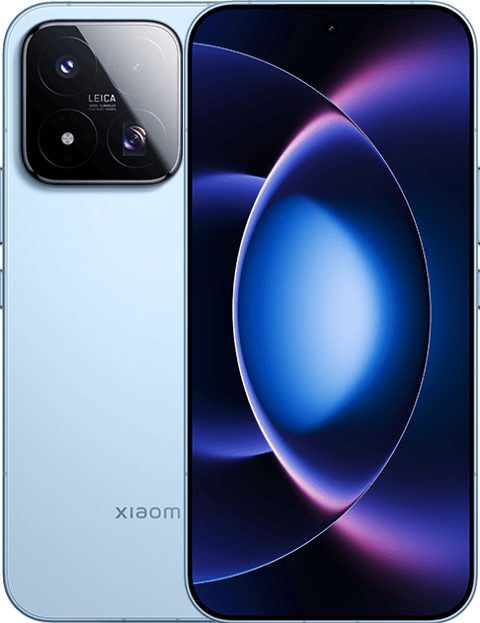

Verdict
Xiaomi 17 Max is clearly better for most people
Overall score
92 Xiaomi 17 Max 83 OnePlus Ace 7
Why pick Xiaomi 17 Max
- Optical stabilization on the main camera
- Wireless charging (50 W)
- 3× optical zoom camera
- 75% brighter screen (3500 nits vs 2000 nits)
Why pick OnePlus Ace 7
- Better water resistance: IP69K vs IP68
Xiaomi 17 Max is slightly better for gaming
Overall score
95 Xiaomi 17 Max 91 OnePlus Ace 7
Why pick Xiaomi 17 Max
- Wireless charging (50 W)
- 75% brighter screen (3500 nits vs 2000 nits)
- Faster USB-C 3 port (vs USB-C)
Why pick OnePlus Ace 7
- Better water resistance: IP69K vs IP68
Xiaomi 17 Max is much better for photos and video
Overall score
92 Xiaomi 17 Max 74 OnePlus Ace 7
Why pick Xiaomi 17 Max
- Optical stabilization on the main camera
- 3× optical zoom camera
- Wireless charging (50 W)
- 75% brighter screen (3500 nits vs 2000 nits)
Why pick OnePlus Ace 7
- Better water resistance: IP69K vs IP68
Xiaomi 17 Max is clearly better for battery life
Overall score
94 Xiaomi 17 Max 86 OnePlus Ace 7
Why pick Xiaomi 17 Max
- Wireless charging (50 W)
- Optical stabilization on the main camera
- 3× optical zoom camera
- 75% brighter screen (3500 nits vs 2000 nits)
Why pick OnePlus Ace 7
- Better water resistance: IP69K vs IP68
Xiaomi 17 Max is clearly better for the money
Overall score
92 Xiaomi 17 Max 78 OnePlus Ace 7
Why pick Xiaomi 17 Max
- Optical stabilization on the main camera
- Wireless charging (50 W)
- 3× optical zoom camera
- 75% brighter screen (3500 nits vs 2000 nits)
Why pick OnePlus Ace 7
- Better water resistance: IP69K vs IP68
Scores by category
- Xiaomi 17 Max
- OnePlus Ace 7
Performance
98 Xiaomi 17 Max 98 OnePlus Ace 7Typical for its chipset
Display
96 Xiaomi 17 Max 88 OnePlus Ace 7Camera
94 Xiaomi 17 Max 64 OnePlus Ace 7Battery
99 Xiaomi 17 Max 89 OnePlus Ace 7Estimated
Build and durability
55 Xiaomi 17 Max 67 OnePlus Ace 7Connectivity and features
94 Xiaomi 17 Max 85 OnePlus Ace 7
Biggest differences
See all specs Spec Xiaomi 17 MaxOnePlus Ace 7 Ahead by
Optical stabilization Better: YesNo
Wireless charging Better: 50 WNo
Optical zoom Better: 3×No
Peak brightness Better: 3500 nits2000 nits +75%
USB port Better: USB-C 3USB-C
Water resistance IP68Better: IP69K
Size and weight
- Xiaomi 17 Max
- OnePlus Ace 7
Full specs
General
Specs Xiaomi 17 MaxOnePlus Ace 7
Announced
Thursday, 21 May 2026
Thursday, 29 October 2026
Released
Thursday, 21 May 2026
Thursday, 29 October 2026
Status
Available
Available
Design
Specs Xiaomi 17 MaxOnePlus Ace 7
Height
162.9 mm (6.41 inch)
162.3 mm (6.39 inch)
Width
77.6 mm (3.06 inch)
77.4 mm (3.05 inch)
Thickness
8.2 mm (0.32 inch)
8.5 mm (0.33 inch)
Weight
219 g (7.73 oz)
217 g (7.65 oz)
Build materials
Back: Glass
Frame: Aluminum
Front: Glass
Back: glass or glass-fiber reinforced plastic
Frame: Aluminum
Front: Crystal Shield Glass
Colors
Black, Blue, White
Black, Purple, White
Resistance
Dust-tight and water-resistant (submersible up to 1.5m for 30 minutes)
Dust and water-resistant (withstands high-pressure water jets; submersible up to 1.5m for 30 minutes)
Resistance certification
IP68
Better:
IP68, IP69K
Display
Specs Xiaomi 17 MaxOnePlus Ace 7
Display type
LTPO AMOLED
LTPO AMOLED
Display size
6.9 inch
6.78 inch
Resolution
1200 × 2608 pixels
1272 × 2772 pixels
Refresh rate
120 Hz
185 Hz
Aspect ratio
19.5:9
19.5:9
Pixel density
420 ppi
450 ppi
Screen-to-body ratio
≈ 90.5%
≈ 89.5%
Peak brightness
3500 cd/m²
2000 cd/m²
Screen protection
—
Crystal Shield Glass
Touchscreen
Yes
Yes
Bezel-less display
Yes
Yes
Display features
68 billion colors
Capacitive Touchscreen
Dolby Vision
HDR10+
HDR Vivid
Multi-touch display
PWM Dimming
1 billion colors
3840Hz PWM Dimming
Capacitive Touchscreen
HDR10+
HDR Vivid
Multi-touch display
PWM Dimming
Hardware
Specs Xiaomi 17 MaxOnePlus Ace 7
Chipset
Qualcomm Snapdragon 8 Elite Gen 5
Qualcomm Snapdragon 8 Elite Gen 5
CPU cores
8
8
CPU technology
3 nm
3 nm
CPU max speed
4.6 GHz
4.6 GHz
CPU architecture
64-bit
64-bit
Microarchitecture
2x 4.6 GHz – Oryon V3 Phoenix L
6x 3.62 GHz – Oryon V3 Phoenix M
2x 4.6 GHz – Oryon V3 Phoenix L
6x 3.62 GHz – Oryon V3 Phoenix M
Memory type
LPDDR5X
LPDDR5X
GPU
Qualcomm Adreno 840 @1.20 GHz
Qualcomm Adreno 840 @1.20 GHz
RAM
12GB, 16GB
12GB, 16GB
Storage
256GB, 512GB
256GB, 512GB
Storage type
UFS 4.1
UFS 4.1
Variants
256GB 12GB RAM
256GB 16GB RAM
512GB 12GB RAM
512GB 16GB RAM
256GB 12GB RAM
256GB 16GB RAM
512GB 12GB RAM
512GB 16GB RAM
Expandable storage
No
No
Benchmarks
Specs Xiaomi 17 MaxOnePlus Ace 7
Kalvo speed score
98
98
AnTuTu 11
3,863,387 Typical for Qualcomm Snapdragon 8 Elite Gen 5 · Rank 21 of 434
3,863,387 Typical for Qualcomm Snapdragon 8 Elite Gen 5 · Rank 21 of 434
AnTuTu 10
2,777,490 Typical for Qualcomm Snapdragon 8 Elite Gen 5 · Rank 15 of 1,536
2,777,490 Typical for Qualcomm Snapdragon 8 Elite Gen 5 · Rank 15 of 1,536
Geekbench 6 multi-core
10,876 Typical for Qualcomm Snapdragon 8 Elite Gen 5
10,876 Typical for Qualcomm Snapdragon 8 Elite Gen 5
3DMark Wild Life Extreme
7,118 Typical for Qualcomm Snapdragon 8 Elite Gen 5 · Rank 30 of 1,252
7,118 Typical for Qualcomm Snapdragon 8 Elite Gen 5 · Rank 30 of 1,252
Software
Specs Xiaomi 17 MaxOnePlus Ace 7
Operating system
Android 16 (Baklava)
Android 17 (Cinnamon Bun)
User interface
HyperOS 3
ColorOS 17
Main camera
Specs Xiaomi 17 MaxOnePlus Ace 7
Camera support
Yes
Yes
Cameras
Triple camera
Dual camera
Wide angle
200 MP, ƒ/1.7, 23 mm, 1.12 μm, 1/1.4" Sensor size
Dual-Pixel PDAF
Optical Image Stabilization (OIS)
200 MP, ƒ/1.8, 23 mm, 0.5 μm, 1/1.56" Sensor size
Ultra-wide angle
50 MP, ƒ/2.4, 17 mm, 102°, 0.64 μm, 1/2.76" Sensor size
8 MP, ƒ/2.2, 16 mm, 112°, 1.12 μm, 1/4.0" Sensor size
Periscope telephoto
50 MP, ƒ/2.4, 70 mm, x3 Optical zoom, 1/2.0" Sensor size
Optical Image Stabilization (OIS)
PDAF (15cm - ∞)
—
Flash support
Yes
Yes
Flash type
LED flash
LED flash
Features
Color Spectrum sensor
High Dynamic Range (HDR)
Laser Autofocus (AF)
Leica lens
Panorama
Color Spectrum sensor
High Dynamic Range (HDR)
Panorama
Video support
Yes
Yes
Video resolution
4320p @ 30 fps
2160p @ 30/60/120 fps
1080p @ 30/60/120/240/960 fps
720p @ 1920 fps
4320p @ 30 fps
2160p @ 30/60/120 fps
1080p @ 30/60/120/240 fps
Video features
10-bit Dolby Vision HDR, Gyro-EIS, HDR10+
Gyro-EIS, Optical Image Stabilization (OIS)
Front camera
Specs Xiaomi 17 MaxOnePlus Ace 7
Camera support
Yes
Yes
Cameras
Single camera
Single camera
Wide angle
32 MP, ƒ/2.2, 21 mm
16 MP, ƒ/2.4, 23 mm, 1.0 μm, 1/3" Sensor size
Features
—
Panorama
Video support
Yes
Yes
Video resolution
2160p @ 30 fps
1080p @ 30/60 fps
1080p @ 30 fps
Video features
Gyro-EIS, HDR10+
Gyro-EIS
Battery
Specs Xiaomi 17 MaxOnePlus Ace 7
Type
Si/C Li-Ion
Si/C Li-Ion
Capacity
8000 mAh
9000 mAh
Wired charging speed
100 W
100 W
Wireless charging support
Yes
—
Wireless charging speed
Better:
50 W
—
Fast charging support
Yes
—
Features
Reverse wired charging
Reverse wireless charging
Bypass charging
Wired charging from 0-58% in 30 minutes (as advertised)
Network
Specs Xiaomi 17 MaxOnePlus Ace 7
SIM cards
Dual SIM (Nano-SIM + Nano-SIM)
Dual SIM (Nano-SIM + Nano-SIM)
VoLTE support
Yes
Yes
Data speed
5G, LTE, HSPA
5G, LTE, HSPA
Connectivity
Specs Xiaomi 17 MaxOnePlus Ace 7
Wi-Fi support
Yes ( Wi-Fi 7 )
Yes ( Wi-Fi 7 )
Wi-Fi standards
802.11/a/b/g/n/ac/ax/be
802.11/a/b/g/n/ac/ax/be
Wi-Fi features
Dual-band, Wi-Fi Direct
Dual-band
Bluetooth
Yes, v5.4
Yes, v5.4
USB ports
Better:
USB Type-C 3.2
DisplayPort
USB On-The-Go
USB Type-C 2.0
USB connectivity
USB charging, USB Mass Storage device (UMS)
USB charging, USB Mass Storage device (UMS)
GPS support
Yes
Yes
GPS features
BDS (B1I & B1C & B2a), GALILEO (E1 & E5a), GLONASS, GPS (L1 & L5), NavIC (L5), QZSS (L1 & L5)
BDS (B1I & B1C & B2a), GALILEO (E1 & E5a), GLONASS (G1), GPS (L1 & L2 & L5), QZSS (L1 & L5)
NFC support
Yes
Yes
Multimedia
Specs Xiaomi 17 MaxOnePlus Ace 7
Loudspeaker
Yes
Yes
Headphone jack
No
No
Audio type
24-bit/192kHz High-Resolution audio, Dolby Atmos, High-Resolution wireless audio, Snapdragon Sound, Stereo speakers
Stereo speakers
FM radio
No
No
Features
Specs Xiaomi 17 MaxOnePlus Ace 7
Sensors
Accelerometer
Barometer
Compass
Gyroscope
Proximity sensor
Ultrasonic under-display fingerprint sensor
Accelerometer
Compass
Gyroscope
Proximity sensor
Ultrasonic under-display fingerprint sensor
Special features
Programmable Power Supply (PPS)
Quick Charge 3+
USB Power Delivery 3.0
Built-in cooling fan
Programmable Power Supply (PPS)
Quick Charge
Universal Fast Charging Specification (UFCS)
USB Power Delivery
These phones share every spec listed here.
Compare with other phones
 Xiaomi 17 Max vs Honor Magic9 Super
- OnePlus Ace 7 vs Honor Magic9 Super
 Xiaomi 17 Max vs ZTE nubia RedMagic 11S Pro (China)
- OnePlus Ace 7 vs ZTE nubia RedMagic 11S Pro (China)
 Xiaomi 17 Max vs Vivo iQOO Neo12
- OnePlus Ace 7 vs Vivo iQOO Neo12
 Xiaomi 17 Max vs Xiaomi Redmi K100 Pro Max
- OnePlus Ace 7 vs Xiaomi Redmi K100 Pro Max
How scores work
Each category score shows where a phone stands among phones launched in the last two years: 80 means it beats 80% of them. Scores move as new phones arrive.
Benchmarks, battery and brightness come from lab tests when the phone was tested. Otherwise the scores use results typical for its chipset, or an estimate from its specifications, and say so.
The camera score rates the hardware (sensor size, lens brightness, stabilization, zoom and video), not the photos themselves.
Small differences people would not notice, such as 120 Hz against 144 Hz, never count as a win. Size and weight are shown but never scored, because bigger is a preference.
Value compares a phone's overall score with what phones at the same price usually score. Phones launched more than three years ago get no value score, because their listed prices are usually used or clearance prices.